
The lowest headline price is not the lowest defensible total unless all bidders priced the same kitchen, responsibilities, and contract risk. Before awarding a contemporary kitchen design contract, put each quotation into a normalised bid register showing supported costs, uncertain sums, exclusions, payment exposure, and warranty gaps.
- Freeze the drawings, specifications, quantities, service points, and responsibility boundaries before comparing prices.
- Mark missing or ambiguous work as unknown exposure, never as zero cost.
- Calculate the evaluated total as the original quoted total plus supported additions minus supported deductions.
- Keep allowances, provisional sums, unresolved exclusions, and payment-at-risk visible beside the evaluated total.
- Put every accepted clarification, variation procedure, milestone, and warranty obligation into the signed contract.
UAE villa kitchen quotes are comparable only after every contractor prices the same documented scope
For a UAE villa project, contemporary kitchen design quotes are comparable only when every bidder prices the same drawings, cabinet schedule, finishes, appliances, MEP changes, stone, installation, approvals, and handover duties. The owner must normalise that scope before comparing headline totals or choosing an interior designing company.
What must be frozen before an interior designing company can submit a comparable kitchen price?
Record the emirate, villa community, quotation date, kitchen size, refurbishment or new-build status, and procurement route. A three-quote comparison cannot be reconstructed until the project records confirm these fields and show what information each bidder received.
- Design issue: issued-for-quotation plan, elevations, sections, reflected ceiling information, cabinet schedule, worktop details, finishes, hardware, appliance schedule, and every revision number and issue date.
- Services: confirmed electrical, plumbing, drainage, gas, extraction, air-conditioning, and lighting points, including who relocates and connects each service. Resolve the relevant decisions to lock before cabinets, MEP, and stone before requesting final prices.
- Site conditions: survey status, demolition limits, access, protection, waste removal, making good, and any damp areas requiring investigation. The U.S. Environmental Protection Agency advises fixing condensation and wet or damp spots promptly to help prevent mould growth.
- Commercial issue: tender instructions, specification, contract terms, clarifications, addenda, approval status, installation boundaries, testing, snagging, cleaning, and handover documents.
A documented bid package should identify the instructions, specifications, pricing documents, proposed contract, and later addenda. The cited sample bidder instructions define addenda as written additions, deletions, clarifications, or corrections and require bidders to report material ambiguities. The sample also mentions best efforts to answer clarification requests within five working days, but it is not a UAE rule or evidence of the procedure used for a particular villa.
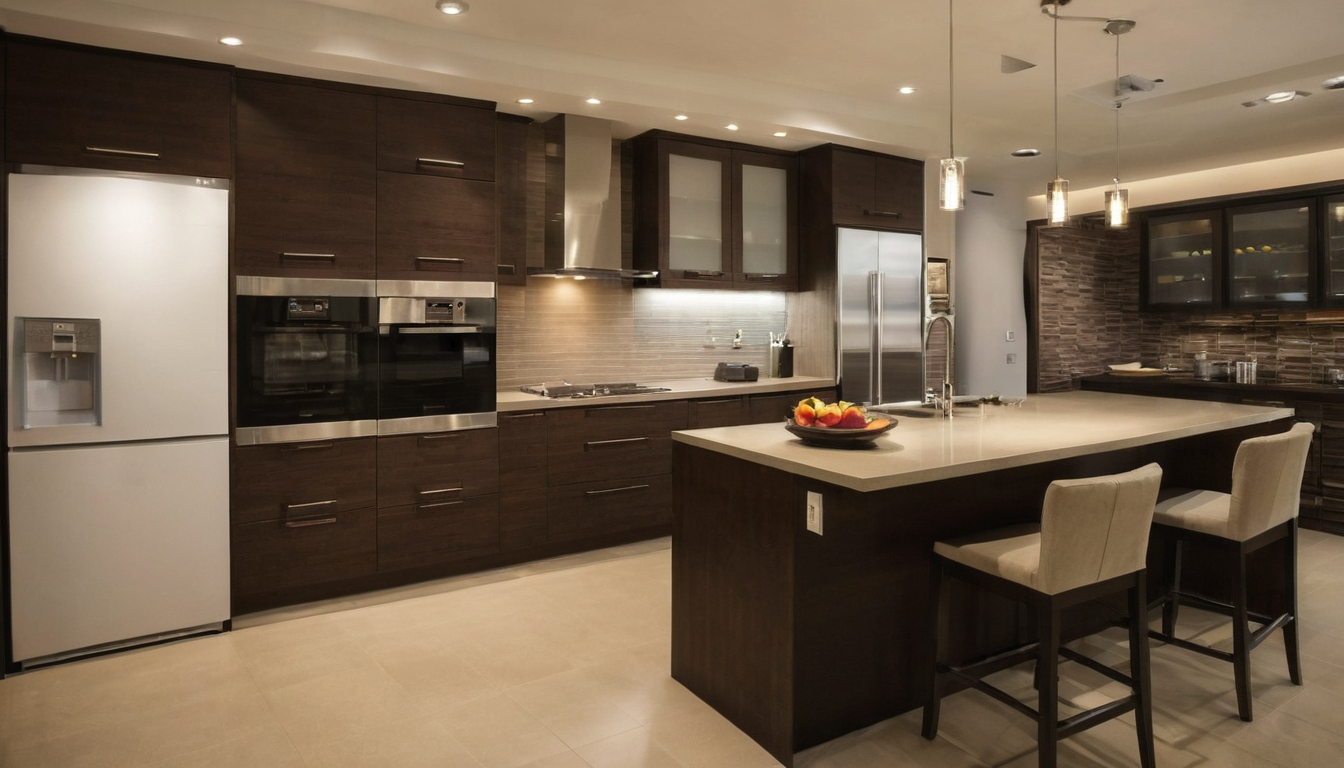
UAE villa kitchen quotes are comparable only after every contractor prices the same documented scope shown as a planning reference for layout, scale, and material decisions.
Treat unpriced, qualified, or ambiguously described work as unknown exposure, not included work and not zero cost. Once every contractor has the same documented scope and written amendments, compare the bids line by line instead of relying on headline prices.
A line-by-line comparison table should replace the three headline kitchen prices
The owner should enter all three UAE kitchen quotations in one comparison ledger with identical rows, quantities, units, tax treatment, and scope notes. Separate cabinetry, hardware, worktops, appliances, MEP, ventilation, demolition, protection, approvals, preliminaries, testing, cleaning, and warranties so every blank, exclusion, and qualification stays visible.
Which line items belong in a contemporary kitchen design quote comparison?
Build the ledger from the approved drawings, specifications, schedules, quotation attachments, and clarifications. Project records are required before any AED amount can be entered. Copy quoted figures exactly and mark every missing amount as not quoted, not zero.
Contractor A
- Source date and validity: unavailable
- Subtotal, VAT treatment, and stated total: unavailable
- Evidence reference: quotation page, clause, schedule, or clarification required
Contractor B
- Source date and validity: unavailable
- Subtotal, VAT treatment, and stated total: unavailable
- Evidence reference: quotation page, clause, schedule, or clarification required
Contractor C
- Source date and validity: unavailable
- Subtotal, VAT treatment, and stated total: unavailable
- Evidence reference: quotation page, clause, schedule, or clarification required
Create identical rows for cabinet carcasses, doors, panels, plinths, internal fittings, hinges, runners, handles, worktops, upstands, splashbacks, sinks, taps, appliances, lighting, power points, plumbing, drainage, hood ductwork, demolition, disposal, protection, delivery, installation, testing, cleaning, approvals, preliminaries, snagging, and warranties. Record who supplies, delivers, installs, connects, tests, protects, and warrants each item.
Each row needs these labelled fields: contractor, source date, validity, quantity, unit, status, quoted AED, VAT treatment, adjustment, unresolved exposure, payment timing, and evidence reference. Use clear statuses such as included, excluded, allowance, provisional sum, client supply, unclear, or not quoted. If one contractor prices cabinetry by linear metre and another prices complete units, flag the row as not directly comparable until the quantities share one measurement basis.
How should VAT, quantities, and client-supplied items appear in the comparison?
Copy each quotation’s VAT wording and calculation without assuming an unstated amount includes tax. Show the original subtotal, stated tax treatment, and stated total separately. Check cabinet units, worktop and splashback areas, hardware counts, appliances, and MEP points against the same issued drawings.
For every client-supplied item, record purchase responsibility, delivery location, unloading, storage, attendance charges, installation, connection, testing, damage risk, and warranty interface. Worktop care requirements also belong in the handover scope. The Natural Stone Institute recommends neutral cleaners, stone soap, or mild liquid dishwashing detergent with warm water for natural stone.
The reconciled ledger shows what has been priced. Allowances and provisional sums show how much of that price remains uncertain.
Allowances and provisional sums determine how much of the quoted kitchen price remains uncertain
In a UAE villa kitchen quotation, an allowance may cover a product or scope whose final selection is not fixed, while a provisional sum may leave the eventual cost open under the contract wording. The actual definitions must come from the proposed contract, so compare the assumed quantity, quality, adjustment method, mark-up, and approval procedure rather than treating either figure as firm.
When is a kitchen allowance too vague to compare?
Read the definition in each quotation and proposed contract before normalising the bids. Contractors may use “allowance”, “provisional sum”, and similar terms differently. The contract must state what the amount covers, how actual cost replaces it, and whether the owner receives a deduction when the final cost is lower.
Treat an allowance as non-comparable until the contractor provides these fields:
- Quoted allowance in AED: unavailable until extracted from the complete quotation.
- Product and quality basis: material, finish, dimensions, performance requirements, and approved reference sample.
- Quantity: units, square metres, linear metres, or another measurable basis.
- Cost coverage: supply, delivery, installation, wastage, accessories, testing, and making good.
- Commercial adjustment: additions, deductions, overhead, profit, VAT, and any procurement fee.
- Approval evidence: dated supplier quotation, product submittal, and written owner approval.
A phrase such as “worktop allowance” does not reveal the slab quantity, edge treatment, cut-outs, upstands, transport, or installation. Likewise, “equal or equivalent” proves little without performance criteria. The cited sample bidder instructions treat equivalence as meeting the specification with prior written approval, but the sample is not a UAE rule and does not establish equivalence for any kitchen product.
How should provisional sums be converted into an owner’s AED risk range?
Separate every provisional sum from the firm contract value, then show low, contract, and supported upper scenarios. Do not invent a range where supplier quotations, measured quantities, or previous final-account records are unavailable.
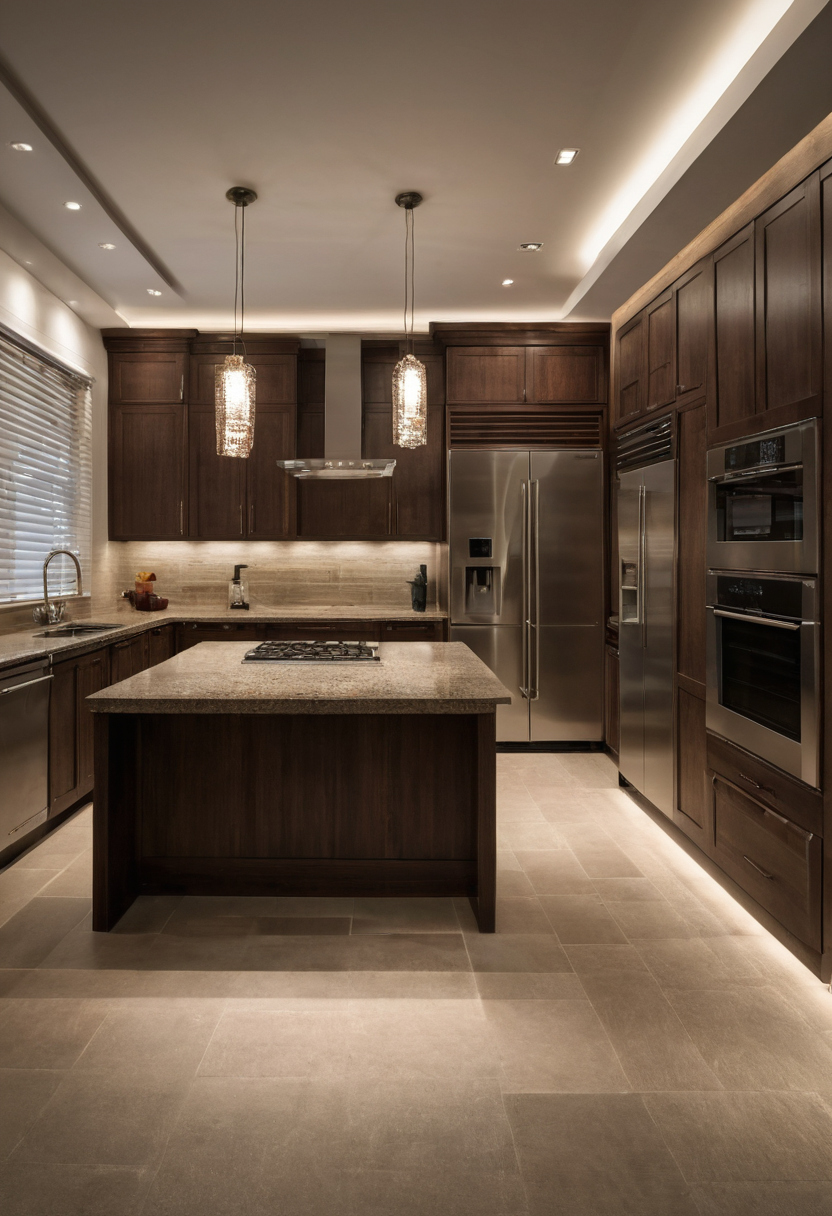
Allowances and provisional sums determine how much of the quoted kitchen price remains uncertain shown as an editorial reference for proportion and finish coordination.
- Record the contractor’s provisional sum and its exact scope.
- Insert a low scenario only when a dated compliant quotation supports it.
- Keep the quoted sum as the contract scenario, subject to the contract’s adjustment clause.
- Insert an upper scenario only when documented pricing supports the quantity and specification.
- Apply contractual mark-up, overhead, profit, and VAT separately, then record the required approval step.
Calculate each scenario as original quoted total plus supported additions minus supported deductions, with unresolved provisional sums shown separately as unknown exposure. Variation orders or final accounts should confirm whether comparable uncertain sums increased, decreased, or stayed unchanged. Those project records are not available here.
Once uncertain sums are visible, check exclusions. Omitted work can make the lowest contemporary kitchen design quote the most expensive final option.
Exclusions can make the lowest contemporary kitchen design quote the most expensive final option
A low UAE kitchen bid is not cheaper when necessary demolition, submissions, protection, electrical upgrades, duct changes, stone cut-outs, appliance connections, making good, waste removal, or testing sit outside the price. Assign every exclusion to a responsible party, add source-backed costs to the evaluated total, and record unpriced exposure as unknown rather than zero.
Which kitchen exclusions commonly cross contractor, MEP, stone, and appliance boundaries?
Check the complete exclusions, assumptions, qualifications, and client-responsibility wording against the drawings and a written responsibility matrix. The matrix should name who designs, supplies, installs, connects, tests, protects, obtains any required approval for, and warrants each component.
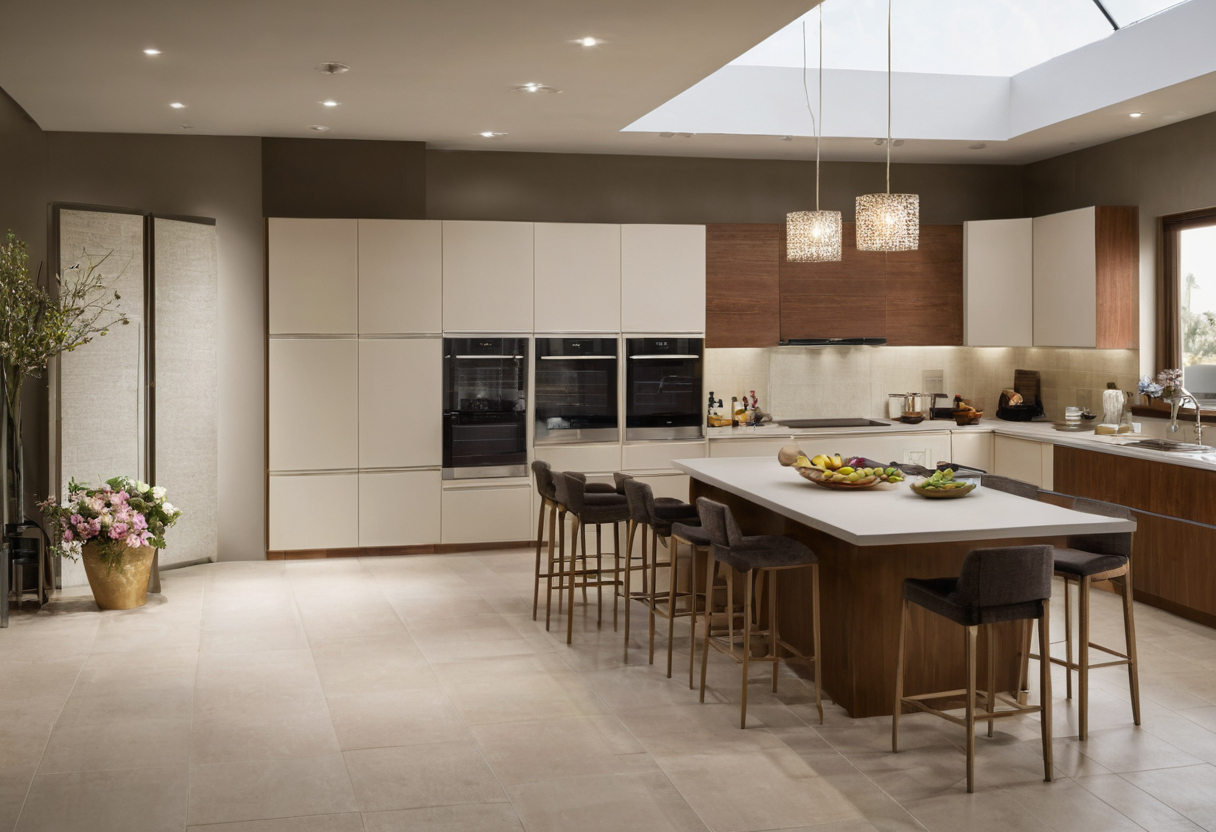
Exclusions can make the lowest contemporary kitchen design quote the most expensive final option shown as a planning reference for layout, scale, and material decisions.
- Enabling work: demolition, service isolation, floor or wall protection, temporary kitchen arrangements, debris handling, and making good.
- MEP interfaces: new circuits, isolators, socket relocation, plumbing valves, drainage changes, water filtration, gas work where applicable, and final testing.
- Ventilation: hood supply, power, duct diameter, routing, external termination, access panels, fire stopping, and any required make-up air. Compare these items against the documented open-plan kitchen ventilation scope.
- Stone interfaces: site templating, edge profiles, upstands, transport, lifting, sink and hob cut-outs, joint locations, brackets, sealing, and repairs after installation.
- Appliances: delivery, unpacking, installation kits, cabinet modifications, connections, commissioning, protective-film removal, and packaging disposal.
- Project controls: developer submissions, deposits, access bookings, permitted working hours, common-area protection, waste procedures, and authority or utility requirements where the documented scope triggers them.
Require a site visit where existing conditions affect pricing, and record whether attendance occurred. A generic tender template may make a pre-bid meeting optional or mandatory, yet that wording does not prove that any UAE kitchen bidder inspected the villa.
How is each contractor’s evaluated kitchen total calculated?
Preserve the original quotation and calculate the normalised figure as original quoted total plus supported additions minus supported deductions. Show allowances, provisional sums, and unresolved exclusions separately. Do not insert an estimated AED amount without a dated supplier quotation, documented variation, or other auditable record.
For each contractor, record the source date, validity, item description, quantity, unit, pricing status, quoted AED, VAT treatment, supported adjustment, unresolved exposure, payment timing, and evidence reference. Mark unavailable project records as “not provided”, not “included”.
The firm evaluated total shows which bid covers the normalised scope at supported prices. The unresolved-exposure register shows what could still move. Payment timing poses another risk: stages should follow verified deliverables rather than contractor cash flow.
Payment stages should follow verified kitchen deliverables rather than contractor cash flow
For a UAE villa kitchen contract, payment milestones should match observable deliverables such as approved shop drawings, verified procurement, carcass installation, worktop completion, testing, and snag closure. Before accepting an interior decoration company’s schedule, check deposit exposure, off-site materials, retention, variation approval, and refund wording.
Which kitchen milestones can the owner verify before releasing payment?
Replace each date-based or percentage-only milestone with an inspection gate, named evidence, and the person authorised to certify completion:
- Design: signed shop drawings, finish samples, appliance schedule, and coordinated service points.
- Procurement: supplier evidence identifying the specified materials and quantities.
- Off-site goods: proof of title, identification, storage, insurance, inspection rights, and delivery obligations.
- Installation: inspected carcasses, fronts, hardware, worktops, services, and making good.
- Completion: testing records, snag closure, handover documents, and agreed retention-release conditions.
Material approval should also confirm what will enter the occupied villa. The U.S. Environmental Protection Agency identifies building materials, furnishings, paints, and varnishes as possible indoor sources of volatile organic compounds.
The proposed payment schedules and contract clauses are required before comparing actual deposit exposure. No deposit percentage should be treated as universally safe without applicable legal or project-specific contract advice.
What should happen when a kitchen variation is proposed?
Require a written instruction defining the changed scope, supported addition or deduction, programme effect, and revised payment timing. The owner or named representative should approve it before execution, except where the signed contract contains a specific procedure for emergency work or concealed conditions.
Record the revised contract value as the original total plus supported additions minus supported deductions. Keep unresolved sums separate rather than assigning them a zero value. Continue the same discipline after payment: warranties protect the owner only when their scope and remedies are written down.
Kitchen warranties are meaningful only when their scope, issuer, start date, and remedies are written down
UAE villa owners should compare warranties by component, responsible entity, duration, exclusions, claim procedure, and remedy. A broad warranty promise is weaker than separate written terms for cabinetry, finishes, hardware, worktops, appliances, MEP connections, and workmanship.
Build a compact warranty ledger from each quotation and proposed contract:
- Cabinetry and finishes: issuer, covered defects, commencement date, duration, moisture exclusions, repair standard, and replacement basis.
- Hardware and appliances: manufacturer document, model reference, authorised supplier and installer evidence, registration duty, labour coverage, and claim contact.
- Worktops: material warranty, fabrication and installation responsibility, and exclusions for staining, impact, heat, chemicals, and maintenance. The Natural Stone Institute warns that abrasive powders and creams can scratch natural stone.
- MEP and lighting: responsibility for connections, testing, access, component replacement, making good, and damage to adjacent finishes.
- Contract remedies: snagging process, response procedure, repair or replacement rights, access rules, unresolved-defect escalation, and stated limits.
Material and handover requirements should support the warranty conditions. The U.S. Environmental Protection Agency recommends increased ventilation while using products that emit volatile organic compounds. For specified qualified products, ENERGY STAR states that qualified LED lighting uses at least 75 percent less energy and lasts up to 25 times longer than incandescent lighting. That statement applies only to qualifying LED products and does not establish the warranty of an unspecified kitchen fitting.
Record statutory or consumer-protection rights only after a qualified UAE source confirms the applicable jurisdiction and current position. Do not treat an undocumented duration or remedy as included. Written clarification replies should also become part of the tender amendments or contract documents. The cited sample bidder procedure treats written replies as addenda and makes bidders responsible for confirming receipt, but it does not prove the process used on a UAE villa project.
Who remains responsible when a kitchen defect crosses product and installation scopes?
Assign one contract lead for every interface. A cracked worktop near a hob cut-out may involve the material supplier, fabricator, installer, appliance supplier, or cabinet maker. The responsibility matrix must identify who supplies, installs, connects, tests, administers the warranty, investigates the cause, and makes good disturbed finishes.
Require written defect and snag records before using an interface example as evidence. Then compare adjusted AED exposure, scope, programme, and contract risk before deciding which award is defensible.
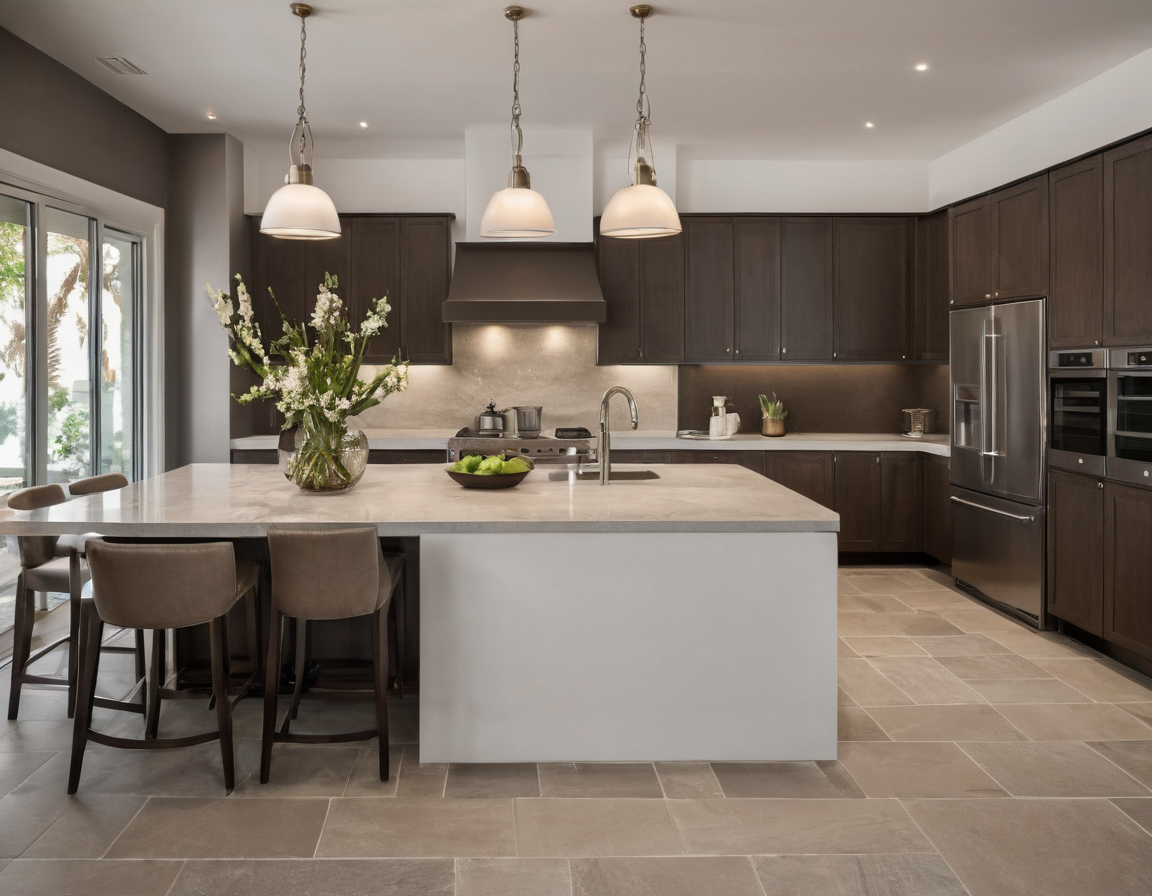
Kitchen warranties are meaningful only when their scope, issuer, start date, and remedies are written down shown as a planning reference for layout, scale, and material decisions.
The award decision should combine adjusted AED exposure with scope, programme, and contract risk
Choose the preferred UAE kitchen contractor from the normalised commercial comparison, not the original price ranking. The award sheet should show firm scope, documented additions, unresolved exposure, payment-at-risk, programme commitments, warranty gaps, and clarification status, with award conditional on closing every material qualification in writing.
What should be resolved before a UAE villa owner signs the kitchen contract?
Build the final bid-clarification register before signature. Record each question, contractor response, price effect, programme effect, and whether the agreed answer appears in the contract rather than remaining in email.
- Confirm the selected layout and test an island against a peninsula before final pricing.
- Rank all bids first by original documented total, then by adjusted total using supported additions and deductions.
- Compare start assumptions, lead times, dependencies, completion criteria, and delay wording.
- Verify any licence, insurance, trade capability, authorised supply, and reference evidence used in the evaluation.
- Attach the signed scope, drawings, schedules, clarifications, payment terms, variation procedure, and warranty documents, with a stated order of precedence.
Worked award summary: original ranking unavailable; adjusted ranking unavailable; documented additions unavailable; unresolved exposure unknown, not zero; preferred bidder not determined. Complete these fields only from the three quotations, supporting records, and signed clarifications.
Frequently asked questions
Is $30,000 enough for a kitchen remodel in a UAE villa?
The budget cannot be tested without the kitchen size, AED conversion basis, drawings, material specification, appliance scope, MEP changes, demolition, VAT treatment, and excluded work. Compare the budget with the normalised AED total and keep unresolved exposure separate. A headline quotation below the budget does not prove that the completed kitchen will remain below it.
What is the golden rule of kitchen design when contractors are pricing the same scope?
Freeze one coordinated design issue before requesting final quotations. Every contractor should receive the same layout, dimensions, appliance schedule, finishes, hardware, worktop specification, service points, responsibilities, and contract amendments. Otherwise, the owner is comparing different kitchens.
What is the most desirable kitchen layout before requesting comparable contractor quotes?
No layout is universally preferable. Select the layout that fits the measured room, aisle clearances, doors, circulation, seating, storage, appliance positions, extraction route, and service connections. Resolve price changes caused by switching between an island and a peninsula before tender.
Do not award the cheapest column. Award only after the normalised bid register identifies the lowest supported total, records every unknown exposure, and puts the agreed pre-award conditions into the signed contract.